

Australia’s global image is often distilled into two glittering urban icons: the harbour brilliance of Sydney and the cultural sophistication of Melbourne. Yet beyond these metropolitan anchors lies a continent-sized tapestry of landscapes, ecosystems, and communities that redefine what travel in Australia can mean. Hidden Australia is not truly hidden—it is simply less narrated. And in that quieter space, authenticity flourishes.
Here are 15 underrated destinations that reveal a deeper, more textured Australia.
1. Albany, Western Australia
Perched on dramatic southern coastlines, Albany blends rugged cliffs with layered colonial and Indigenous history. The winds here feel ancient, and the Southern Ocean carves granite headlands into sculptural forms. It’s a place for contemplation rather than spectacle.
2. Karijini, Western Australia
In the Pilbara region, Karijini’s ochre gorges and emerald rock pools reveal geological time in exposed layers. Hiking through Hancock Gorge feels like walking through the Earth’s bloodstream—raw, mineral, and humbling.
3. Port Fairy, Victoria
A coastal village where 19th-century cottages meet windswept beaches. Port Fairy offers a gentler rhythm—artisan bakeries, maritime history, and the kind of silence that recalibrates the nervous system.
4. Kangaroo Island, South Australia
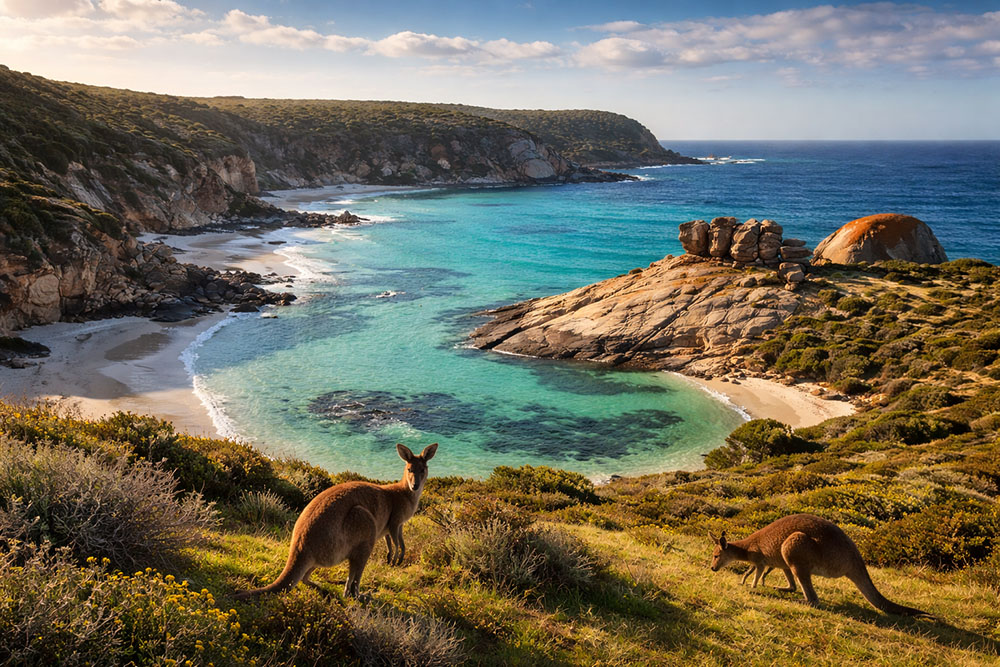
Often overshadowed by mainland attractions, this island sanctuary is a biodiversity haven. Sea lions bask undisturbed, and Remarkable Rocks rise like abstract art against a cobalt sky.
5. Broken Hill, New South Wales
An outback town infused with artistic rebellion. Its desert light has drawn painters for decades, while its mining history reveals Australia’s industrial backbone.
6. Lord Howe Island
Capped visitor numbers preserve its fragile ecosystem. Coral reefs, volcanic peaks, and translucent lagoons make it feel less like a destination and more like a privilege.
7. Stanley, Tasmania
Dominated by “The Nut,” a volcanic plug rising from Bass Strait, Stanley merges pastoral charm with geological drama. Tasmania’s air feels different—colder, sharper, restorative.
8. Coober Pedy, South Australia
A subterranean town where residents escape desert heat by living underground. Opal mines and lunar landscapes create an almost surreal atmosphere.
9. Yamba, New South Wales
A surf town without the frenzy. Yamba’s headlands and river mouths offer a relaxed coastal culture that feels untouched by mass tourism.
10. Exmouth, Western Australia
Gateway to Ningaloo Reef, where whale sharks glide through warm currents. Unlike the more commercialized Great Barrier Reef, Ningaloo feels intimate and immediate.
11. Hahndorf, South Australia
Australia’s oldest surviving German settlement, where timber-framed architecture and cool-climate wines reflect layered migration stories.
12. Lightning Ridge
Black opals shimmer beneath arid plains. Its eccentric community embodies frontier resilience and creative independence.
13. Mission Beach, Queensland
Rainforest meets reef in rare proximity. Cassowaries wander near palm-lined shores, reminding visitors that wilderness still claims territory here.
14. Esperance, Western Australia
White sands so fine they squeak underfoot. Kangaroos lounging on beaches challenge every preconceived notion of wildlife encounters.
15. Inverell, New South Wales
A gem town with sapphire fossicking and rolling countryside. Its quiet charm lies in agricultural heritage and community warmth.
What binds these destinations is not merely their relative obscurity but their refusal to perform for global expectation. They offer immersion rather than entertainment. In a world increasingly curated for Instagram, these places reward patience.
Ecologically, they reveal Australia’s staggering diversity—from tropical reefs to alpine highlands, arid deserts to temperate rainforests. Scientifically, this continent hosts some of the planet’s most unique flora and fauna, shaped by millions of years of geographic isolation. Traveling beyond major cities exposes visitors to these evolutionary marvels in situ, rather than as footnotes in guidebooks.
Culturally, regional Australia preserves narratives often overshadowed by urban cosmopolitanism. Indigenous heritage is more visible and deeply rooted in many remote areas. Mining towns tell stories of economic booms and busts. Agricultural communities reflect cycles of drought and renewal that define national resilience.
There is also a psychological dimension to venturing beyond the obvious. Research in environmental psychology suggests that awe-inspiring natural environments can expand perception of time and increase life satisfaction. Standing alone on a wind-carved cliff in Albany or descending into Karijini’s ancient gorges disrupts cognitive autopilot. The mind recalibrates.
Hidden Australia challenges travelers to reconsider luxury. Here, luxury is space—kilometers of untracked coastline, night skies unpolluted by artificial light, conversations unhurried by traffic. It is measured not in Michelin stars but in silence.
In moving beyond Sydney and Melbourne, travelers engage with a more expansive narrative. They encounter a country that is less about skyline silhouettes and more about elemental forces—wind, water, fire, and earth shaping both land and identity.
To discover Hidden Australia is not to reject its famous cities, but to contextualize them within something far larger. A continent that whispers rather than shouts. A landscape that rewards curiosity. And a travel experience that lingers, long after the journey ends.